Our areas of expertise
The workshop offers professional solutions adapted to and respectful of artwork preservation, in accordance with the international and professional deontological regulations.
-
-
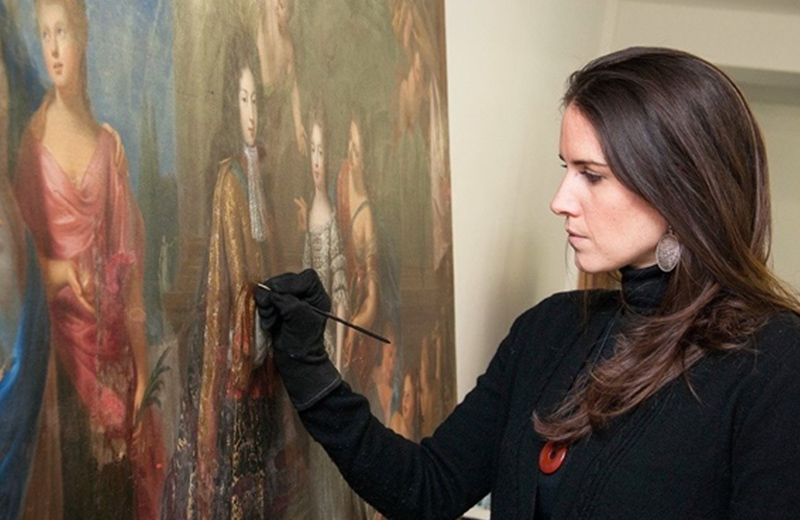
Easel paintings
-
Contemporary art
-
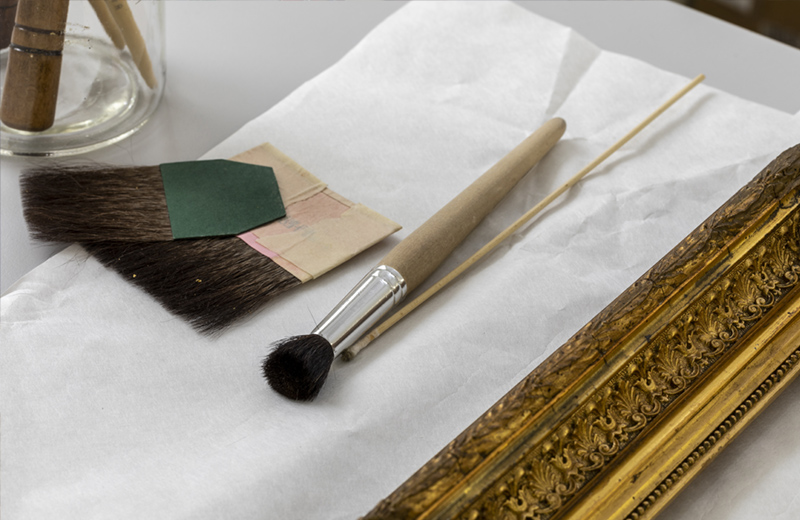
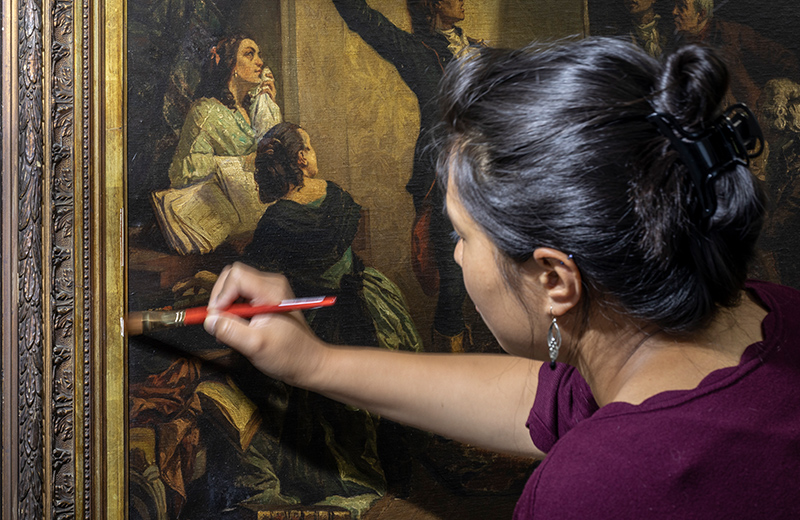
Traditional and contemporary gilding
-
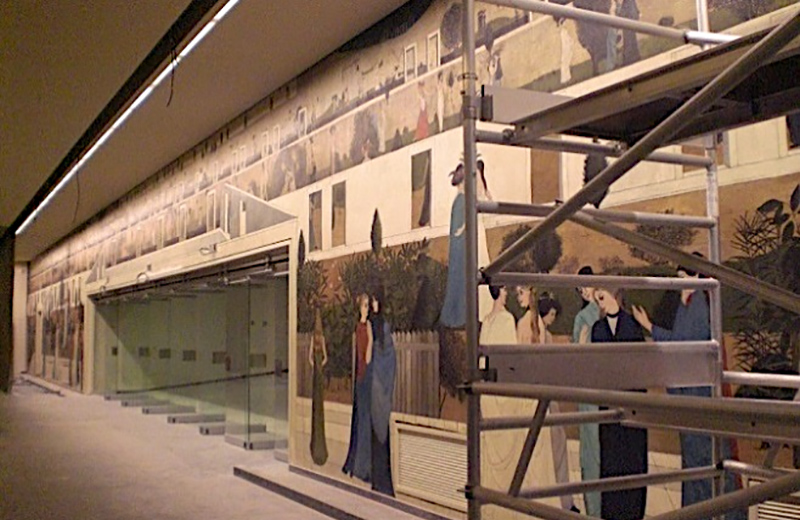
Wall decorations
-
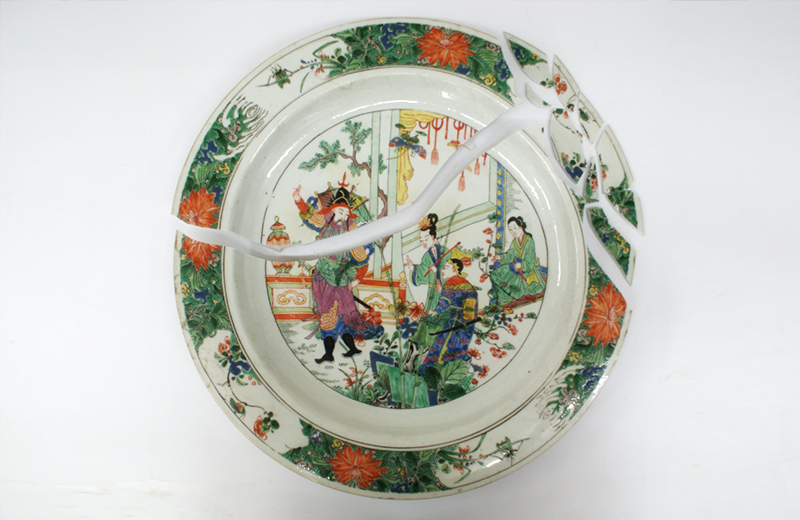
Ceramics and glass
-
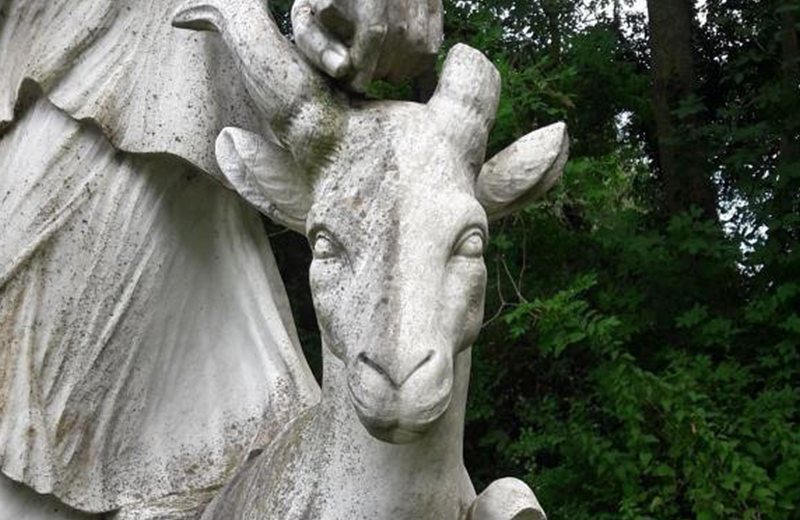
Interior and exterior polychrome sculptures
-
Graphic arts, books
-
Technological study of the works
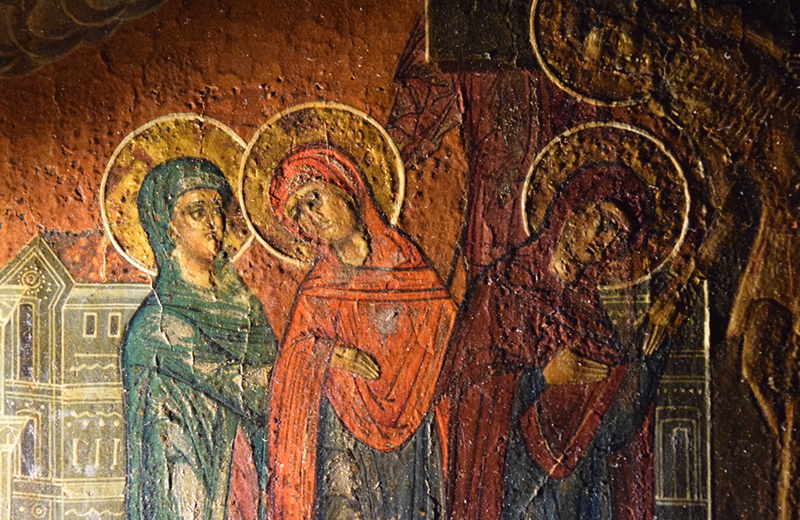
Are they cult objects or works of art? That is the question. Icons are first and foremost sacred objects with spiritual value. They are dedicated to liturgy and an expression of faith, and their main purpose is to serve as tokens of the presence of God. Originally, they were not conceived as objects with a merely artistic value. Today, there is increasing interest in icon art in the West. Icons are now essentially appreciated as works of art.
With time, they have become museum artefacts, but at the end of the day, they maintain their original status, namely that of cult objects. This ambiguity has a major impact on the approach of art conservators-restorers, who may face ethical problems in the restoration of these objects.
The different interventions (various mediums):
- Condition reports
- Preventive and remedial conservation
- Conservation and restoration treatments based on modern restoration techniques (solvent gels, resin soaps, buffer solutions, etc).
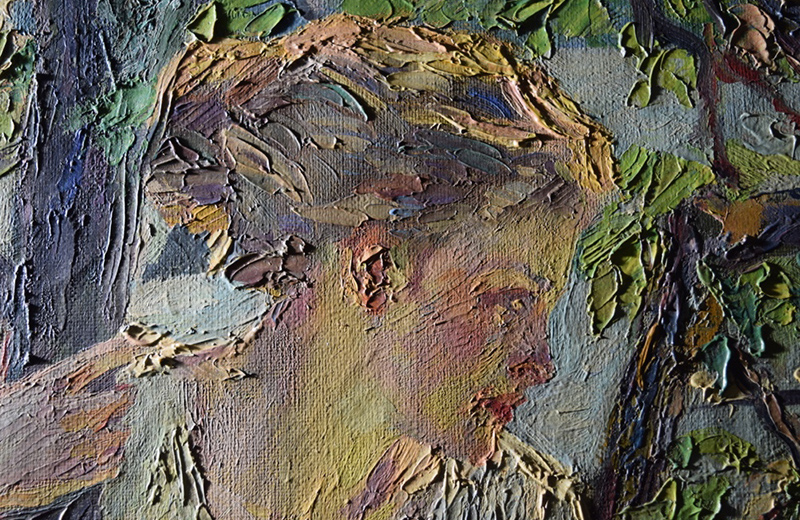
The materials paintings are made up of deteriorate over time, either naturally or accidentally, or due to wear and tear. The main aim of every restorer is to detect the most appropriate treatment, just like a doctor faced with a sick patient. The main issues are a support that has become fragile or infested with micro-organisms or wood-eating insects, lacunae or bulges in the paint layer, and oxidised varnish.
For restorers to do their work properly, they need to literally immerse themselves into the material. They need to understand how the artist applied the different layers of paint, which type of medium and brushes were used, and so on. They must also keep in mind that the work was created in a certain era and style, with a technique that might have been established by other artists in that same era, who may have inspired the artist in question.
The different interventions:
- Condition reports
- Preventive and remedial conservation
- Conservation and restoration treatments based on modern restoration techniques (solvent gels, resin soaps, buffer solutions, etc).
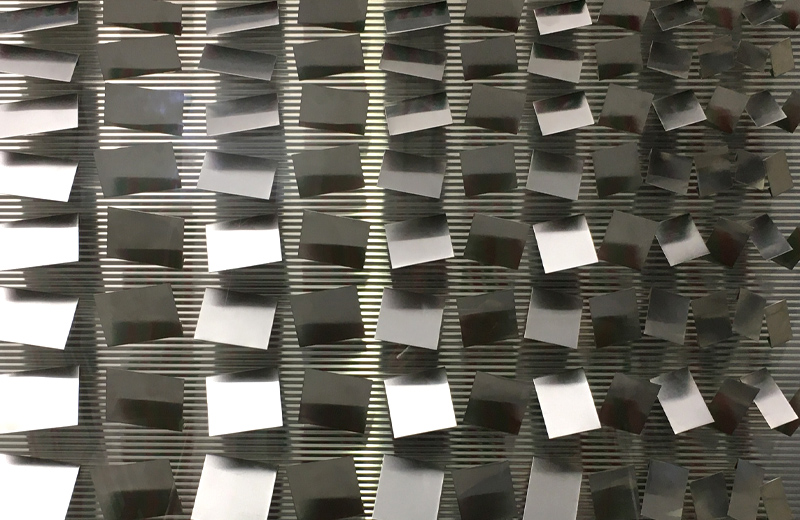
Broadly defined as the art of today, contemporary art is characterised by its global nature, the wide range of cultures it explores and the influence of technology and the digital age. It is globally diverse and its forms vary from one group to another. It involves experimental and dynamic combinations of incredibly varied materials that are part of the modern cultural dialogue.
Anchored in the present, contemporary art constantly evolves with the times. The conservator-restorer must continuously adapt to this evolution by keeping up-to-date with the latest technical innovations, and by collaborating with different conservators in different disciplines. It’s not always easy, but vitally important! RestART’s multidisciplinary workshop is totally consistent with this requirement.
To a large extent, when it comes to contemporary art, the majority of artists are still alive. This offers the possibility and the absolute duty to gather as much information as possible about their intentions and the materials used, either through interviews or documentation. Establishing a protocol between the conservator and the artist, without distorting the artist's intention, is an integral part of our work.
The different interventions (on various media):
- Report on the condition of the artwork
- Preventive and curative conservation
- Conservation-restoration treatment based on modern restoration techniques.
Gold, silver or copper... Frames are available in a variety of materials. The eye is usually drawn to the subject represented, but the frame is also a work of art in itself, which demands particular attention.
The frame may present several lacunae, either in the support - the assembly - or in the first layers of primer coat. The profiles and ornaments are the first elements of the frame to be damaged over time.
These changes occur due to ageing or as a result of resizing or accidents. Once a condition report has been drawn up, the conservators-restorers look for the best treatment method for this particular object, in the right conditions and using adequate materials. Two different techniques are used for gilding, one is a traditional technique and the other is mordant gilding.
The traditional technique, which has been used for centuries, is based on recipes which have withstood the test of time, and ensures an art object lives on. The materials used are always of natural origin. This technique is suitable for objects that will be displayed indoors, while mordant gilding is used more for exterior and/interior works (with a support made of wood, stone, metal and so on), where particular attention is also paid to the architecture of the building.
The steps in the traditional wood gilding process are very similar for both new gilding and restoration.
The different interventions:
- Treatment of the support (wood, stone or metal)
- Preparation of the support with bondings made of animal glue
- Preparation of the support with layers of primer
- Sanding of the material
- Placing of metallic sheets
- Burnishing with agate - this final step fixes the gold onto the support and gives the material its shine.
Works like paintings, stuccos and mosaics are often very complex. They are made up of several layers: the wall or floor, and multiple layers of mortar covered by paint, tiles or stucco decorations.
Each layer plays a role in the condition of the object and when problems arise on the surface, the restorer should check each layer to detect where the problem originated before solving it with a specific treatment.
Once the treatment has been administered, the restorer can propose measures to guarantee the work is properly preserved in the future, such as focusing on environmental parameters (humidity, temperature) or applying protective products onto the surface.
The different interventions:
- Condition reports
- Photographic evidence
- Preventive and remedial conservation
- Conservation treatments (surface consolidation, cleaning, protection)
- Proposal of long-term conservation solutions
"... the inseparable link between restoration and the work of art (is) that the work of art conditions the restoration and not vice versa" C. Brandi, Theory of Restoration, Monum, Editions Patrimoine, p. 29
All conservation-restoration interventions call for a number of parameters linked to the artefact to be taken into account, where ‘artefact’ refers to any object created by man. Examples are the material, the initial development and the changes it has undergone throughout the years. The object also needs to be placed in its historical and aesthetic context.
When a piece arrives in our workshop, we take account of all these elements when seeking the most appropriate treatment method. The main focus is on preserving the object’s integrity. Therefore, the interventions are reduced to a minimum and the products used are always reversible.
Materials
Ceramics, glass, stone materials and plaster all have one thing in common: essentially, they are composed of minerals.
These minerals are characterised by:
- unique physical and chemical properties: they are both solid (according to the hardness index) and fragile (they are at risk of shattering/chipping).
- very diverse optical properties, such as textures, colours, sheen, transparency, opacity, brightness/matteness.
- molecular bonds that give them a range of different density levels, from porous to glassy.
Development
- The artist/artisan chooses a raw material based on its specific properties to create an object, sculpture or vessel for functional, aesthetic or ceremonial purposes.
- The stone is sculpted or carved.
- The clay and silica are sculpted/moulded/cast/poured and chemically transformed during the baking process.
- The plaster is moulded or sculpted.
Alterations:
With time, the artefact undergoes changes that may:
- sometimes create a patina that sublimates the materiale
- be structural in nature (in that case, conservation treatment is necessary)
- be aesthetic in nature (this requires an intervention to increase the readability or comprehension of the material)
Every type of stone is different and has specific characteristics (chemical and mineral composition, structure), which the restorer must be well aware of to be able to intervene efficiently. Moreover, stone sculptures often present traces of polychromy, which must be preserved and integrated so as to maintain the appearance the artist had originally intended to create. Sculptures displayed outdoors pose an even greater challenge, because not only does the restorer need to propose an adequate treatment, solutions also need to be devised allowing the work to be displayed outdoors even in the future.
The different interventions:
- Condition reports
- Photographic evidence
- Preventive and remedial conservation
- Conservation treatments (surface consolidation, cleaning)
- Proposal of long-term conservation solutions
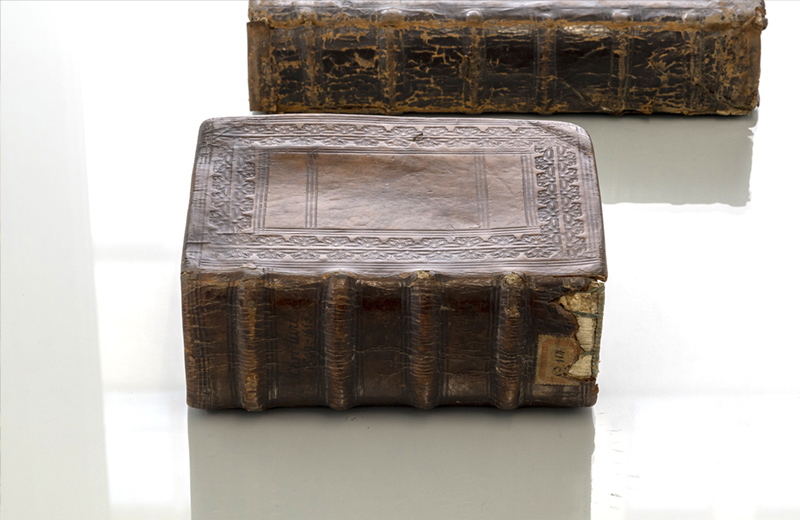
Writing long preceded books, yet today, books are our primary source of writing. Books are, in essence, complex cultural objects which serve to pass on knowledge, ideologies, thoughts and know-how. They also act as objects that protect and preserve their precious contents.
In the West, the materials used to make books have evolved. From thick wooden covers for parchments to cardboard and paper, book covers can be wrapped with a variety of materials, from gold leaf to textile, parchment, leather and paper. Depending on the commissioner, the target audience of the book and its intended use, these materials are decorated and treated more or less intensively.
Today, the conservation of cultural heritage, which includes books, aims to preserve the significance of the object and respect its usage. Therefore, treatment processes are aimed at serving the object’s functional purpose and significance, all the while considering its material properties.
This premise calls for certain criteria to be taken into account:
- Respect for the object as a whole
- Accessible consulting, both at the level of the book and the reader
- Flexible materials, allowing for the book mechanisms to work
- Long-lasting materials and mechanisms
- Good-quality support and media, allowing for the text and images to be appreciated
- Optimal protection of the object and its contents
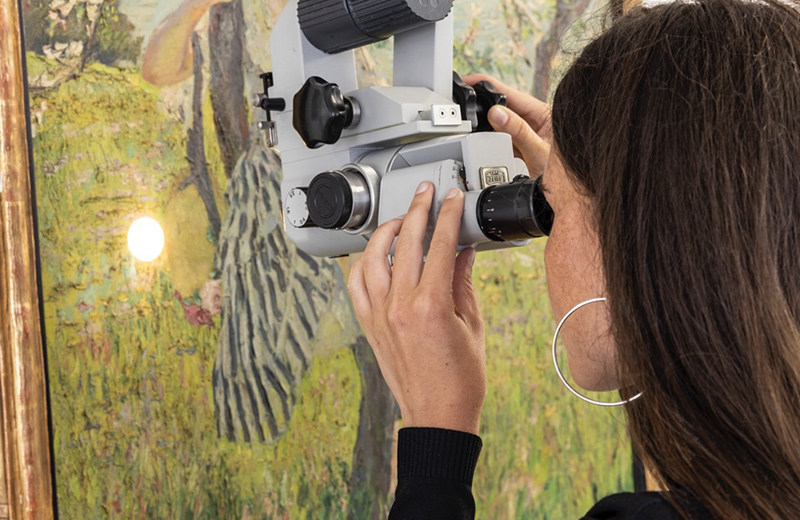
Do you own a work that you would like to submit for technological analysis rather than conservation-restoration treatments? We can help!
A meticulous analysis, coupled with comprehensive documentation based on a range of scientific methods, including photography, examination under visible light, low-angled light, fluorescent UV light, a binocular microscope, macro USB or a light table, also helps preserve works and often reveals precious information that may be useful for future restoring.